By Patricia Dorsey April 9, 2026
In a busy café, the payment process is more than just a technical setup; it profoundly influences the entire customer experience. During peak hours, even minor delays can create bottlenecks, leading to long queues and lost business opportunities.
Customers demand speed, accuracy, and minimal wait times, while staff require systems that enhance, not hinder, their efficiency. In a competitive market, an optimized payment flow for a cafe is a primary driver of both customer satisfaction and revenue.
Counter POS: The Traditional Backbone
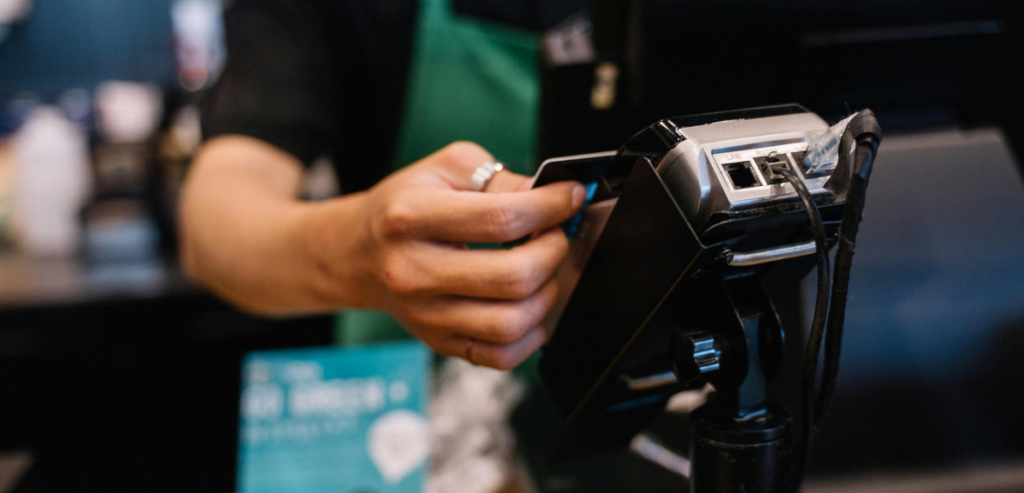
The POS counter system remains the most popular payment method in cafes because of its simplicity. The customer makes the order directly with the staff. The staff helps the customer navigate the menu, answers their queries, and processes the payment. The human touch makes this system highly personalized. The system ensures the accurate entry of complicated orders.
The drawback of this system is that during peak hours, it becomes highly inefficient. Each customer has to be attended to individually. The more customers in the line, the greater the chance of deterring potential customers. The staff has to handle both the ordering and the payment simultaneously. The drawback of this system does not detract from the fact that the counter POS system remains the most essential system.
Mobile Ordering: Speed and Convenience
Mobile ordering enables customers to view the menu, place orders, and pay using their phones. It saves them the time of queuing in the store. It is more beneficial during peak hours when the queue is long. The cafe will receive the customer’s order in advance. The staff will be able to prepare the orders rather than process them. It is more accurate as the customer will be the one inputting the orders. The customer will not be required to queue in the store.
While it significantly saves time by allowing counter pickups, mobile ordering has limitations. Not all customers are tech-savvy, and a sudden surge in digital orders can still overwhelm kitchen staff, requiring a robust backend management system to prevent delays.
Self-Service Kiosks: Automation in Action
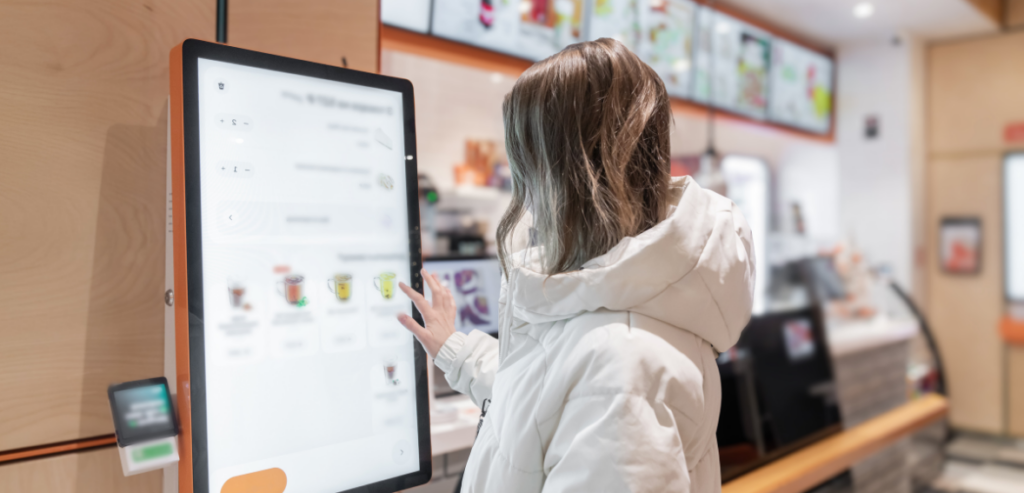
Self-service kiosks balance traditional counter service and mobile ordering. By allowing guests to use in-store touchscreens, these stations ease staff workload and speed up the ordering process. They also encourage customers to browse the menu thoroughly, often leading to higher order values.
These systems minimize errors and ensure consistency, though they require upfront hardware costs and floor space. While they may not fit small layouts or be intuitive for every guest, occasional staff assistance can quickly resolve any user difficulties, ultimately boosting overall throughput.
Across all three modalities, the strongest POS for cafes is the one that fits your peak-hour pattern, your average ticket size, and the kind of customer attention your team can sustain without burning out by 11am.
Comparing Speed and Throughput
Speed is an essential element in the operations of cafes. However, the speed of the café is not determined by the rate at which one customer is being served. Instead, it is determined by the number of customers who can be served simultaneously. The counter POS system serves customers sequentially.
This may cause long queues at the café during peak hours. Mobile ordering enables the café to serve multiple customers at once. The kiosk system also has the advantage of serving multiple customers simultaneously. However, the kiosk system may be limited by the number of kiosks in the café. The best way to increase the café’s speed is to distribute the workload across the systems.
For example, the mobile ordering system may be used to serve regular customers who know what they want. The kiosk system may be used to serve walk-in customers. The POS counter system may be used to serve customers who request special orders. The distribution of workload across the systems ensures a smooth flow in the café.
Impact on Staff Efficiency
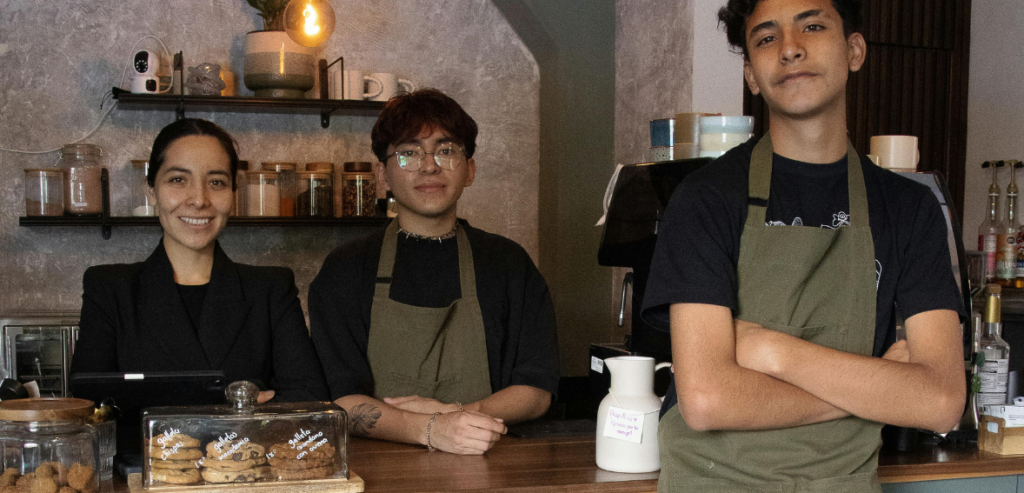
The payment flow directly affects how the staff performs throughout the day. Counter POS demands constant interaction, which can be physically and mentally tiring during peak hours. Staff have to attend to orders, payments, and customers simultaneously. Mobile ordering helps in this regard by reducing staff workload by giving order-taking responsibility to customers.
This helps the staff focus more on the quality of the preparations. Similarly, kiosk systems help minimize workload, though sometimes assistance may be needed for customers unfamiliar with the technology. This helps staff perform better throughout the day, which, in turn, improves the quality of service provided to customers.
Customer Preferences and Behavior
It is therefore essential to understand customer behavior when selecting an appropriate payment flow. Not all consumers interact with technology in the same way. While some consumers like the independence and speed of mobile ordering, others prefer the personal experience of counter service. Kiosks, on the other hand, are ideal for consumers who prefer to control their ordering experience without waiting in line.
A café with only one system, therefore, is likely to be unable to meet all its consumers’ needs. Offering various options ensures that every customer has an experience they feel comfortable with. While some consumers, such as the regulars, might opt for mobile ordering, others, such as the visitors, might rely on the counter staff to guide them through the process. This is an essential strategy for cafes, as it ensures customer satisfaction and repeat business.
Order Accuracy and Error Reduction
Order accuracy is important for ensuring customer satisfaction and efficiency. Any mistake can cause delays, wastage of time and resources, and ultimately dissatisfy the customer. Counter POS heavily relies on staff accuracy, which can be impaired by pressure during peak hours. This is addressed by mobile ordering systems, which allow customers to enter their own orders.
Effective interface design ensures that customers enter their selections accurately, reducing miscommunication and the need for corrections. This streamlines service and significantly enhances the overall guest experience.
Cost and Investment Considerations
Each payment method has a distinct cost profile. Counter POS systems have low upfront costs but higher long-term labor expenses. Mobile ordering involves development or integration fees, while kiosks require significant initial investment in hardware and space.
Despite maintenance costs, automated technologies can lower labor expenses over time. Cafés must weigh short-term expenditures against long-term gains in efficiency and revenue to choose the right investment for their business.
Payment Flow for a Cafe: Finding the Right Mix
The best cafes do not use a single payment method. Rather, they have found a way to combine different payment systems to achieve a balanced approach. Counter POS provides the personal touch and helps handle complex orders. Mobile ordering helps regular customers save time. Kiosks help in managing footfall in the store efficiently. This way, cafes can distribute the workload and minimize the risk of congestion.
This hybrid approach helps businesses meet the diverse requirements of customers. It also helps make you more resilient, so even if one payment method is having difficulties, the others will still function normally. It is very important to find the correct combination for your business. This way, it becomes a seamless and efficient payment experience for customers.
Managing Peak Hour Traffic Effectively
Peak hours are the ultimate stress test for a café’s payment system. During the peak hours, the customer volume grows much faster. Hence, even the slightest inefficiencies in the system will result in long lines and lost customers. A well-organized system will effectively manage the customer volume by directing the customers to different ordering methods. For example, mobile ordering will effectively manage customers who wish to pre-order.
Kiosks will effectively manage walk-in customers. Additionally, the counter POS will effectively manage complex or personalized orders. Another factor to consider in a well-organized system is the effective management and coordination of the employees. They will effectively manage the different ordering methods. Effective guidance will also be necessary to ensure customers use the correct ordering method. By preparing to handle customer volume during peak hours, a café will maintain speed and quality.
Designing a Seamless Customer Journey
A successful payment flow is not just about speed; it’s about delivering a seamless journey from entry to order completion. It’s about helping customers understand where they need to go, how to order, and how to pay without hesitation. This involves a thoughtful layout design, instructions, and processes within each channel. It’s about helping customers navigate the payment flow, whether they’re using a kiosk, app, or counter-based POS.
Decision friction is something we want to eliminate. When customers are confident in the payment flow, they can navigate it faster and make decisions more easily. This not only helps them navigate faster but also increases satisfaction. It’s about delivering a seamless journey so that customers can focus on enjoying the experience without worrying about how they order. This will give a better impression of the café.
Leveraging Data for Continuous Improvement
The modern payment system can provide useful information that can be used to enhance business operations over time. By analyzing factors such as the number of orders, peak hours, and average transaction time, the business can optimize its operations. For instance, if the data indicates that the average time spent at the counter is long, the business can invest in kiosks to help balance the demand.
Similarly, analyzing customer information can help determine which payment system is best suited to serve them. This will allow the business to improve its operations by making informed decisions. By doing this, the business’s operations will be able to evolve with changing customer needs.
Conclusion
The choice between counter POS, mobile ordering, and kiosks is not about choosing one or the other, but about understanding how they can be integrated into your café’s ecosystem. These systems have their own advantages, and their efficiency depends on how well they can be integrated into the overall ecosystem. Cafes can achieve high volume, reduced customer queue time, and overall efficiency by adopting a balanced approach that supports different payment flows.
This will ensure that all customer needs are met, creating a more inclusive atmosphere. The overall efficiency of a café’s ecosystem can be ensured if these are integrated into the overall operations and customer behavior. In a café, the flow of payments is important not only for processing but also for overall efficiency and success.
FAQs
Which payment method is best for a busy café?
A combination of counter POS, mobile ordering, and kiosks best balances speed and flexibility.
Does mobile ordering reduce wait times?
Yes, it allows customers to order in advance, reducing queues at the counter.
Are kiosks expensive to implement?
They require upfront investment but can improve efficiency and reduce long-term labor pressure.
Can small cafes use multiple payment flows?
Yes, even small cafes can effectively combine basic mobile ordering with counter service.
How can cafes improve order accuracy?
By using digital systems like kiosks or mobile apps, and properly training staff.